Kropyvnytskyi Marko Lukych
(1840–1910)
Ukrainian playwright, actor and director,
founder of Ukrainian professional realistic theater
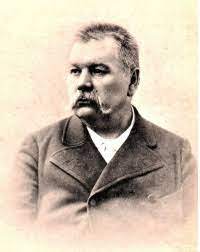
Marko Lukych Kropyvnytskyi was born on May 10 (22), 1840, in the village of Bezhbayraki (now Kropyvnytske village, Novoukrainskyi district, Kirovohrad region). In 1856 he graduated from the Bobrynets three-grade district school, and in 1862-63 he was a free student at the Law Faculty of Kyiv University.
He worked as a clerk in various institutions in Bobrynets, then in Yelisavethrad, while participating in amateur performances, which eventually led to the final decision to devote his life to theater.
He was forced to work under the conditions of total restrictions on everything Ukrainian (among the most famous are the Valuev Circular of 1863, which banned the publication of literature in the Ukrainian language, and the Ems Decree of 1876, which categorically prohibited, in particular, performances and texts for music "in the Little Russian dialect"), but he served the cause of preserving Ukrainian national identity and developing Ukrainian national culture with all his work.
On October 27, 1882, on the stage of the Yelisavetgrad Winter Theater (now the Kirovohrad Academic Regional Ukrainian Music and Drama Theater named after M. L. Kropyvnytskyi), the artist opened the theater season with the play Natalka Poltavka by Ivan Kotliarevskyi. With this performance, he was the first to declare to the world the maturity of Ukrainian theater culture and its identity.
Works by Ukrainian playwrights continued to prevail in the repertoire of M. Kropyvnytskyi's troupe: plays by I. Kotliarevskyi, H. Kvitka-Osnovyanenko, T. Shevchenko, M. Starytskyi, and others were selected for productions.
The need to develop a new Ukrainian drama that would convey the spirit of the time inspired Kropyvnytskyi to take up the pen himself. The artist became the author of more than 40 original plays, including: "Until the Sun Rises, the Dew Eats the Eyes," "Glitai or the Spider," "By Revision," "Two Families," "Olesya," and others.
His students were prominent figures of theater, including Mykola Sadovskyi, Panas Saksahanskii, Mariia Zankovetska, Hanna Zatyrkevych-Karpynska, Yefrosynia Zarnytska, Yulia Shostakivska, and other prominent artists of the late 19th and early 20th centuries.
Marko Kropyvnytskyi, an actor, director, musician, singer, and composer, became a true reformer of Ukrainian theater, created his own school of directing and performing arts, which earned him the fame of one of the luminaries of Ukrainian professional theater.
The artist died on April 8 (21), 1910. He was buried in Kharkiv.